
}Fast Approval
⛟Free Shipping
Exclusive Deals
ZOnline Prescription

$100 OFF first TRT Order
- Improve Recovery
- Better Sleep
- Don’t Let Low-T holdyou back
4.3 ★★★★⯨
4,521 reviews • Trustpilot

TRT Options Available in all 50 States
- Get Your Edge Back
- Check your T-Levels at Home
- Test 130+ Biomarkers
4.3 ★★★★⯨
8,996 reviews • Trustpilot

From $28/month + Membership
- Increased Energy plus Focus
- Personalized Treatment Plan
- Increase Muscle Mass
4.8 ★★★★★
12,142 reviews • Trustpilot

50% OFF your First mont w/ 12 Month Plan
- Raise Your Testosterone. Raise Your Game
- More Energy. More Focus
- Personalized Protocols
4.3 ★★★★⯨
32 reviews • Trustpilot

Start at $143/month with 12 months plan
- Free shipping, plain packaging
- 3 to 5 days from prescription to your door
- No Insurance Required
4.0 ★★★★☆
15 reviews • Trustpilot

TRT Options Starting @ $77/month
- For Men who refuse to Settle
- Video Visits
- Online Prescriptions
4.2 ★★★★☆
25 reviews • Trustpilot

Starting @ $99/month
- Restore Testosterone. Reclaim Energy
- 100% Online
- FREE Visits & Shipping on ALL Orders
4.3 ★★★★⯨
15 reviews • Trustpilot

TRT Treatment Plan starting @ $99
- Injections or Topical Cream Options
- FSA/HSA payment options
- 60 Day Prescription Option
4.6 ★★★★⯨
6,047 reviews • Trustpilot

TRT Options starting @ $95
- Boost Energy & Wellness
- Injectable & Oral Options
- Know Your Numbers. Live Better
4.1 ★★★★☆
18 reviews • Trustpilot

Save 25% on 3 month TRT Supply
- Labs included in every Plan
- Online Pharmacy
- No Insurance Required
4.0 ★★★★☆
15 reviews • Trustpilot
What Is TRT and How Does It Work?
Testosterone replacement therapy exists for one specific reason: some men’s bodies stop producing enough testosterone on their own, and when that happens, it shows up in ways that are hard to ignore. Low energy that doesn’t improve with sleep. A sex drive that’s quietly disappeared. Muscle that’s harder to build and fat that’s harder to lose, even with the same effort that used to work. TRT is the medical answer to that specific problem – a prescribed way of restoring testosterone to a healthy range when your body isn’t making enough on its own.
It’s worth being precise about what “low” actually means here, because it’s not just a feeling. Doctors generally look for total testosterone below 300 ng/dL, confirmed with two separate blood tests, alongside real symptoms – not just a number on a lab report. That combination matters: plenty of men have symptoms that feel like low T but turn out to be something else entirely, which is exactly why a proper diagnosis (not just an online quiz) is the right starting point.
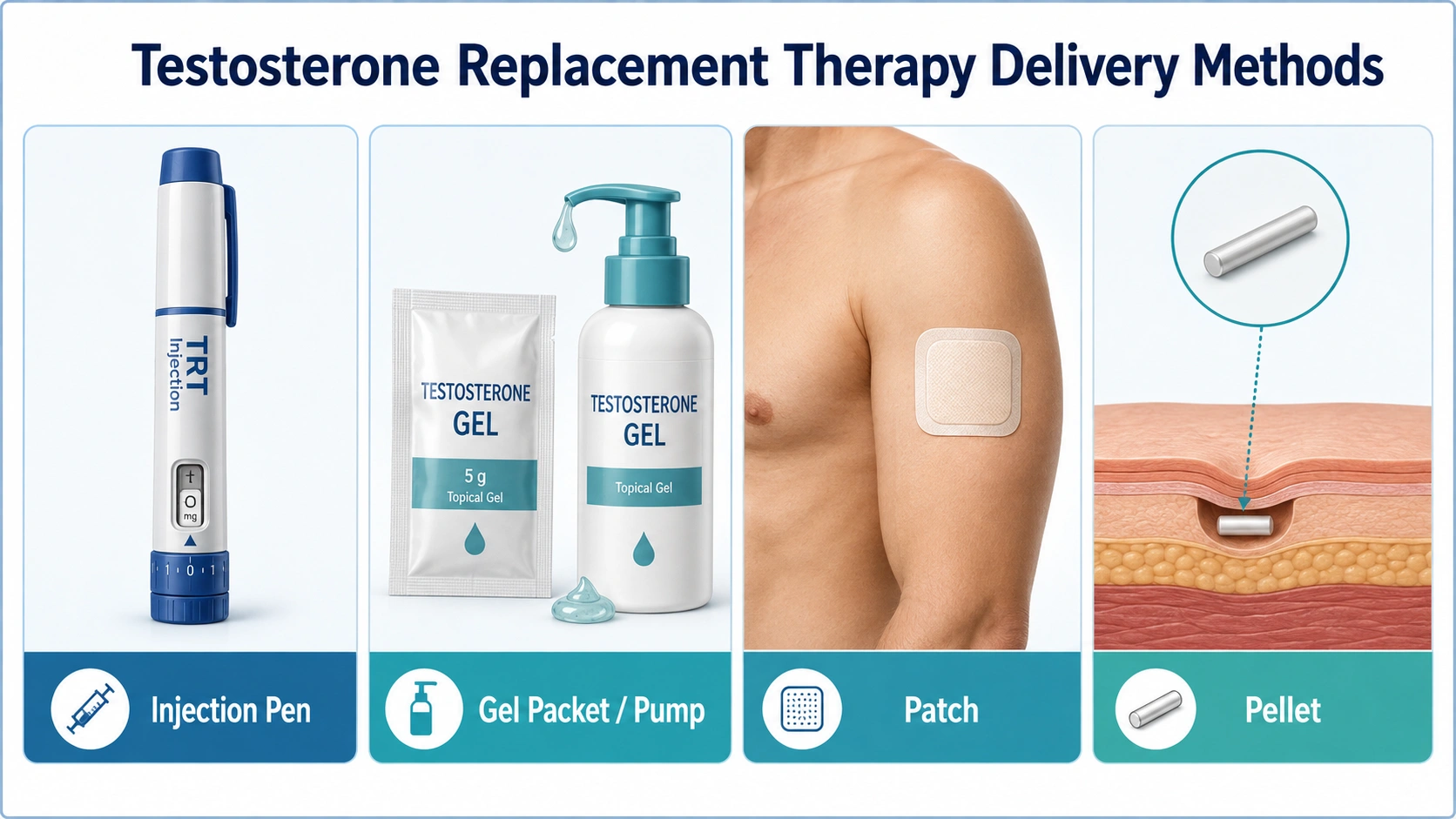
Once low testosterone is confirmed, TRT works by supplying the body with a manufactured form of the hormone, delivered in one of several ways depending on what fits your lifestyle:
- Injections – either into a muscle every 1-2 weeks, or under the skin weekly. This tends to produce the most noticeable results, though some men notice their energy dips slightly right before the next dose is due.
- Topical Gels – applied daily to clean, dry skin. Convenient, but requires care to avoid transferring it to a partner or child through skin contact.
- Patches – worn daily and rotated to different skin locations to reduce irritation.
- Pellets – implanted under the skin by a provider every 3-6 months, offering a steadier, more hands-off option once it’s in place.

Who's a Candidate for TRT?
TRT isn’t something to start just because you’re feeling a bit run down – it’s meant specifically for men with a confirmed medical diagnosis. Generally, that means:
- Total testosterone consistently below 300 ng/dL, confirmed on two separate blood tests
- Real, persistent symptoms – things like fatigue, low libido, reduced muscle mass, or mood changes that line up with what low testosterone actually causes
- No underlying condition (like an untreated sleep disorder or thyroid issue) that might be causing the same symptoms instead
It’s also worth knowing what TRT is not meant for. It’s not approved or recommended for otherwise healthy men chasing performance or anti-aging benefits, and it’s rarely the right call when low testosterone is simply a byproduct of normal aging rather than a diagnosed medical condition – in those cases, the risks tend to outweigh the benefit. A licensed provider’s job is to sort out which category you actually fall into before anything gets prescribed.
What Results Can You Expect?
Most men don’t notice a dramatic overnight change – TRT tends to work gradually, and the timeline varies depending on which symptoms you’re hoping to improve.
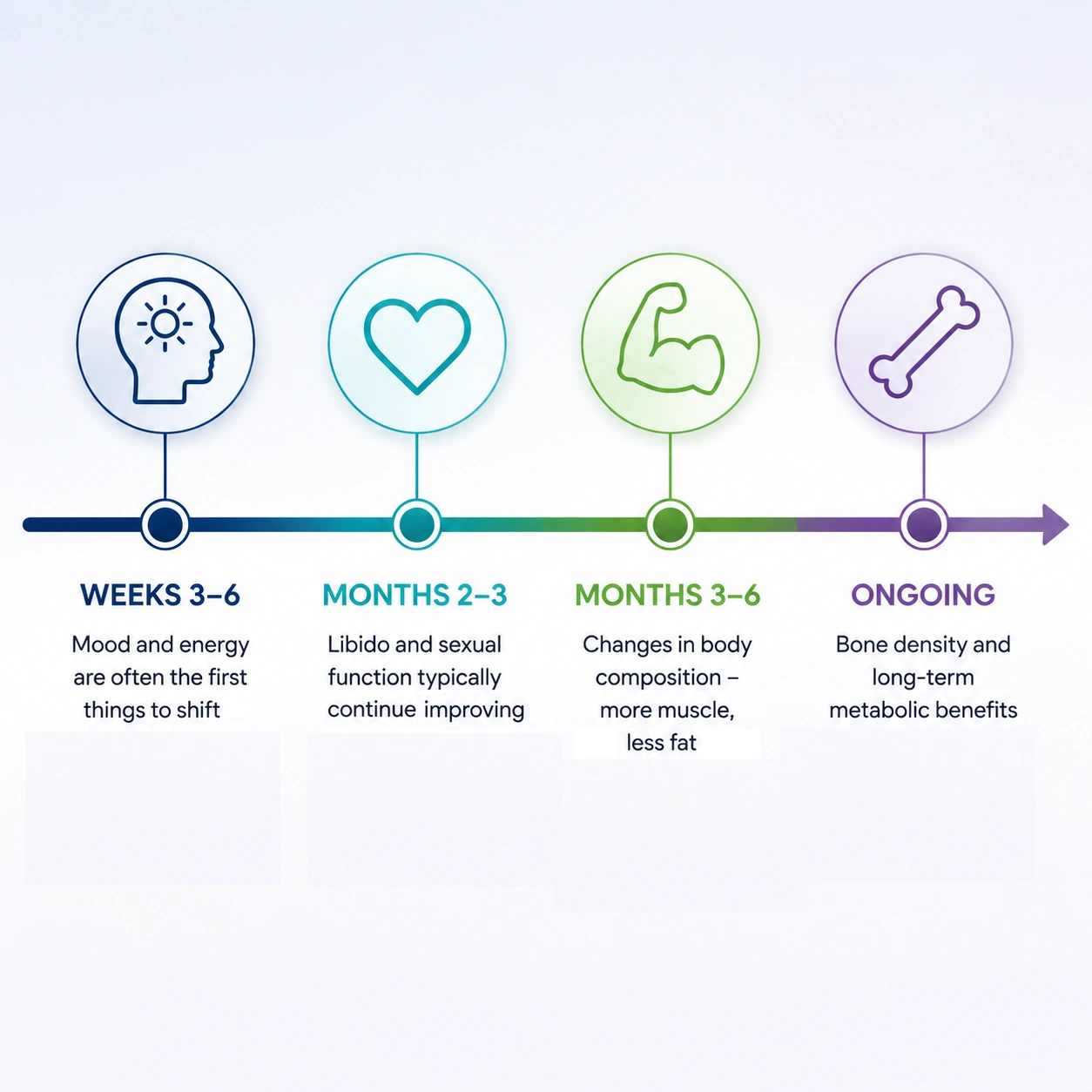
Typical timeline:
- Weeks 3-6: Mood and energy are often the first things to shift – many men report feeling noticeably less foggy and more like themselves
- Months 2-3: Libido and sexual function typically continue improving during this window
- Months 3-6: Changes in body composition – more muscle, less fat – tend to become visible here, especially when paired with consistent exercise
- Ongoing: Bone density and long-term metabolic benefits build gradually over months of consistent treatment
Results depend heavily on your starting testosterone level, the delivery method you choose, and how consistently you stick with treatment. Regular follow-up bloodwork isn’t just a formality – it’s how your provider makes sure your levels are landing in a healthy range, not just “higher than before.”
Potential Side Effects of TRT
Like any hormone therapy, TRT comes with tradeoffs worth understanding upfront rather than discovering later.
Common, usually manageable side effects:
- Skin irritation at the application site (gels, patches)
- Injection site soreness or swelling
- Acne or oily skin
- Mood fluctuations, particularly with injections as levels rise and fall between doses
Effects worth monitoring with your provider:
- Increased red blood cell count, which is why routine bloodwork matters
- Reduced sperm production – TRT can suppress natural fertility, which matters if you’re planning to have children
- Elevated PSA (prostate-specific antigen) – TRT doesn’t cause prostate cancer, but it’s monitored closely regardless
- Changes in cholesterol levels
TRT also isn’t something you simply stop on a whim – because it can shut down your body’s natural testosterone production, going off treatment needs to be managed by your provider rather than done abruptly.
None of this is medical advice. A licensed provider can walk you through exactly what to expect and monitor for based on your own health history.
Frequently Asked Questions
How do I know if I actually have low testosterone?
The only reliable way is a blood test – ideally two, taken on separate mornings, since testosterone naturally fluctuates throughout the day. Symptoms alone aren’t enough for a diagnosis, since things like fatigue and low mood can have plenty of other causes.
Is TRT safe long-term?
For men with a genuine diagnosis, TRT is generally considered safe under medical supervision with regular monitoring. That said, it does carry real risks – including effects on fertility and cardiovascular markers – which is why ongoing bloodwork and provider check-ins matter throughout treatment, not just at the start.
Will TRT affect my fertility?
Yes, it can – TRT often suppresses natural sperm production, since your body senses higher testosterone and scales back its own hormone signaling. If you’re planning to have children, it’s worth discussing fertility-preserving options with your provider before starting.
Can I use HSA/FSA for TRT?
In most cases, yes, since it’s a prescribed medical treatment – though it’s worth confirming with your specific plan administrator.
How to Verify a Safe Provider
Marketing claims are easy to make. Here’s what actually tells you whether a TRT provider is legitimate:
» Requires Real Bloodwork, Not Just a Quiz
A legitimate provider will order actual lab testing before prescribing anything – not just have you fill out a symptom checklist.
» Licensed Medical Review
A real physician or nurse practitioner should review your labs and history personally, not just an automated system.
» Verify 503b FDA Registration
If a provider offers compounded testosterone, check the FDA’s registered outsourcing facilities database to confirm legitimacy.
» Transparent Pricing
Clear monthly costs with no hidden fees or surprise charges after signup.
» Ongoing Monitoring Included
Legitimate TRT treatment includes follow-up bloodwork – if a provider doesn’t mention ongoing monitoring, that’s a red flag.
Red Flags:
No bloodwork required before prescribing, pricing that seems too cheap to be sustainable, no mention of follow-up monitoring, or a provider unwilling to name their pharmacy/lab partner.
trtcomparisons.com is a free online resource that offers reviews and comparisons of companies and the products and services they provide. All representations and warranties regarding the accuracy of the information are disclaimed. Company trademarks featured on our site are the property of their respective trademark holders and listings on our site do not imply endorsement. trtcomparisons.com does not claim to represent every available company, product, or service existing in the market as a whole.
trtcomparisons.com may receive compensation from the companies featured on this site. All forms of rankings, evaluations, reviews, and opinions featured on this site are determined internally and subjectively. The trtcomparisons.com team works hard to keep site information up to date, but all information is presented “as is” and should not be assumed accurate.
All users of this site are subject to the site’s “Terms of Use.”